Diana Baker Smith
Penrith Regional Gallery, Home of the Lewers Bequest
Curated by Nina Stromqvist
11 May - 4 August 2024
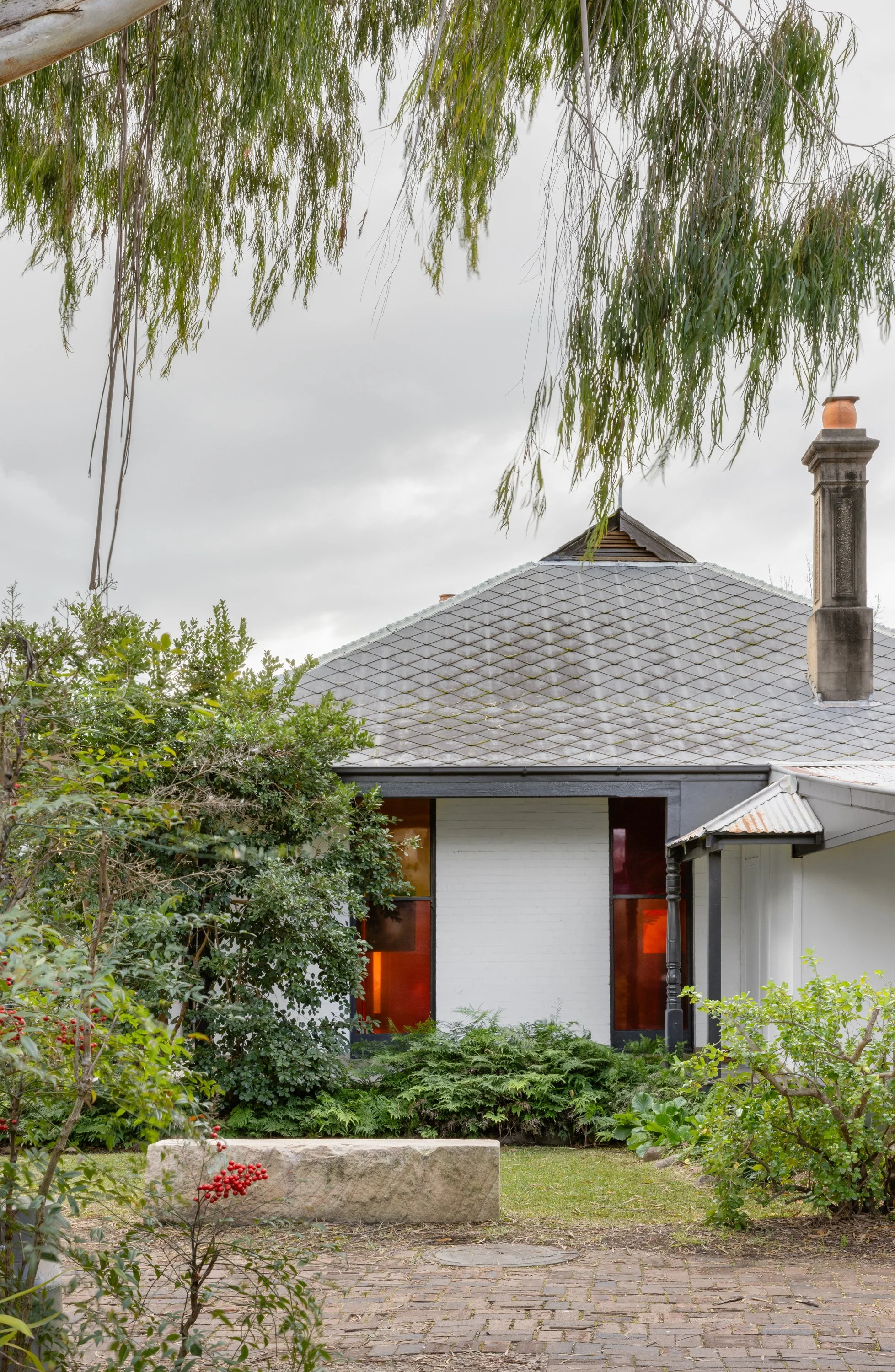
“Archives, often incomplete with gaps and silences, offer evidence for historians' linear arguments. But expanding the archive's meaning to various forms can reshape our approach to history and memory. Artist Diana Baker Smith explores this, using performance to access and embody memories though site-specific responses.
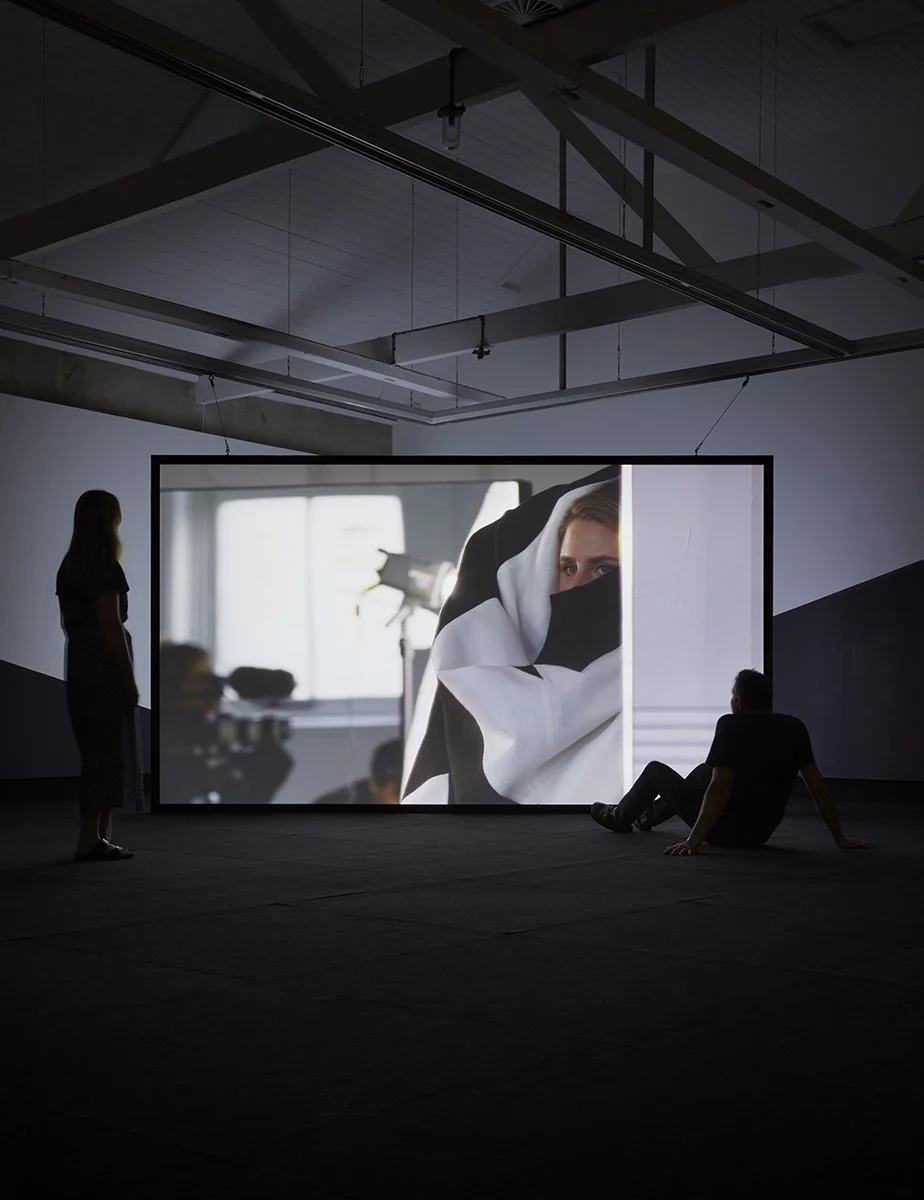
This Place Where They Dwell, 2024 is a major new commission by Baker Smith and is filmed and presented in Modernist artist Margo Lewers' former home, now the Penrith Regional Gallery. The 4-channel video installation unpacks traces of Lewers’ life, using performance and sound in collaboration with choreographer and performer Lizzie Thomson and composer and soprano Jane Sheldon.” Nina Stromqvist
Images: Diana Baker Smith, This Place Where They Dwell, 2024 Penrith Regional Art Gallery, Home of the Lewers Bequest, installation view. Photographer: Katherine Lu
Diana Baker Smith
Falling Towards Another (A Score for the Void)
2024
Graphic Score and Live Performance
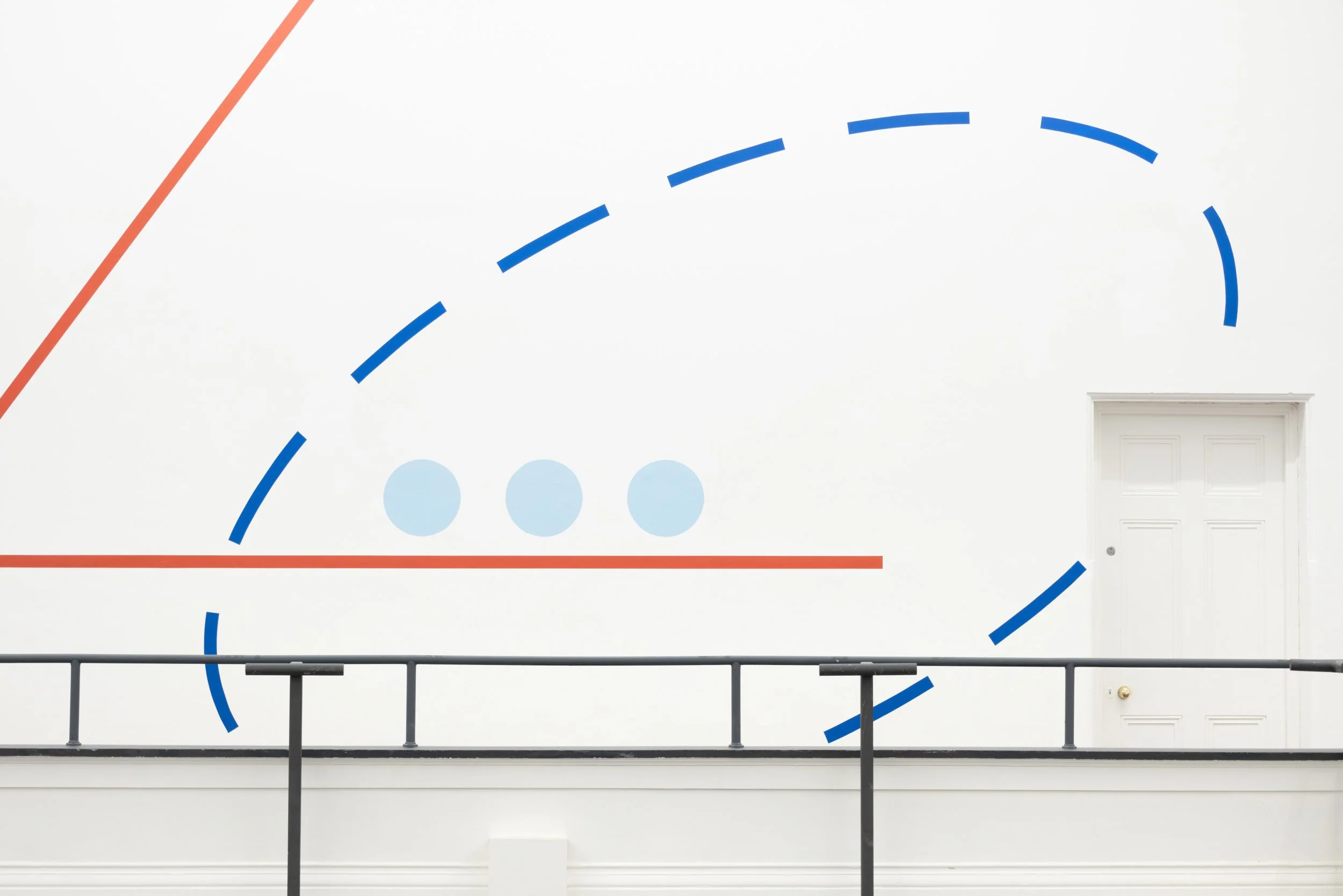
Falling Towards Another (A Score for the Void) is a site-specific performance and installation commissioned by the Perth Institute of Contemporary Arts (PICA) in 2024. Situated in the architectural void of PICA’s mezzanine—once part of a public school built in 1899—the work draws on the building’s colonial history and transformation into a contemporary art institution.
Baker Smith developed a large-scale graphic score, painted directly onto the mezzanine walls, that maps the building’s former features—windows, archways, doorways—now bricked over but still faintly visible. These visual marks become both a record of architectural loss and an invitation to consider how institutions shape historical consciousness. Inspired by archival drawings, the score uses notational forms to trace the spatial absences and temporal shifts embedded in the site.
Working with dancers Emma Fishwick and Isabella Stone, and composer Jane Sheldon, the score was translated into a live performance and a video work titled Falling Towards / Flying Away. Across these forms, the project explores the interplay of movement, sound, and spatial memory as a means of reckoning with the cultural logics underpinning settler-colonial institutions.
Taking its title from Karl Marx’s description of land, labour, and capital as bodies “constantly falling towards one another and at the same time constantly flying away,” Falling Towards Another uses the logic of the score to examine the tensions and continuities held within colonial architectures. Through choreography, sound, and collaborative gesture, the work invites audiences to consider how bodies—and histories—move through space, and how sites themselves carry the rhythms of rupture and return.
“The building became a kind of score in itself—layered with erasures and interventions that speak to the institutional logic of forgetting.” — Diana Baker Smith, Art Guide Australia, 2024
Work Credits
Dancers: Emma Fishwick, Isabella Stone
Choreography: Diana Baker Smith, Sofie Burgoyne
Textile consultation: Leah Giblin
Design assistance: Zoe Gojnich and Kate Polkingorne
Clothing: Kowtow
___________
The 2024 Judy Wheeler Commission is made possible by the generosity of the Simpson Family.
Installation view and performance, Diana Baker Smith, Falling Towards Another (A Score for the Void), Judy Wheeler Commission, Perth Institute of Contemporary Art, 2024. Photo: Daniel Grant.
Diana Baker Smith
A Score for Reconstruction
2024
Newcastle Art Gallery
Digital print on vinyl, 2 x 20m panels
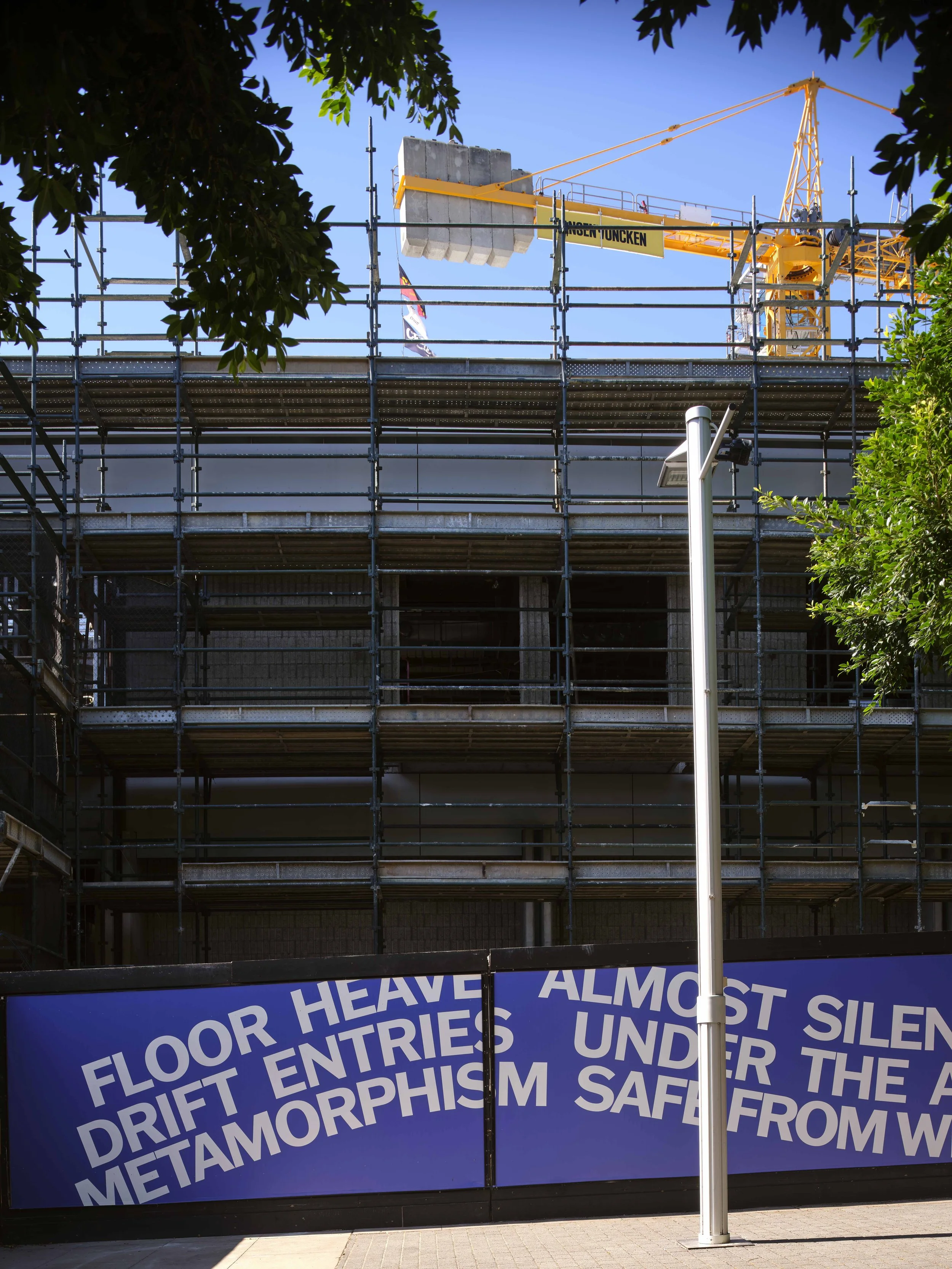
A Score for Reconstruction is a text-based public artwork commissioned by Newcastle Art Gallery for its major expansion. Installed along a temporary hoarding on Laman Street, the work invites audiences to consider their relationship to the rhythms of the city and its ongoing cycles of change, renewal, and development.
Drawing on geological and colonial histories, specifically the ground-remediation works required to stabilise the site’s former coal mines, Baker Smith created a series of movement prompts using the visual language of mining maps and geological strata. These movement prompts, centred on ideas of loss, creep, drift, and flow, transform the invisible shifts beneath our feet into embodied gestures.
The bold, wave-like text layout mimics cross-sections of sediment and rock layers, while the colour palette references mapping conventions used in geological surveys. In recontextualising these diagrams through performance, the work brings to the surface the slow, imperceptible processes that shape the land beneath us.
A Score for Reconstruction asks how we might attune to layered histories of place, including those shaped by extraction and colonial occupation, through the moving body. By following the score, audiences are invited into a mode of sensory attention: one that foregrounds the instability of ground, memory, and historical narrative itself.
______
Commissioned by Newcastle Art Gallery for the Laman Street Hoarding Commission
Diana Baker Smith, A Score for Reconstruction, 2024. Installation view, Newcastle Art Gallery. Photo: Matthew Carbone.
La Trobe Art Institute
Bendigo
18 Aug to 5 Nov 2023
Artists: Diana Baker Smith, Lorraine Connelly-Northey, Zoë Croggon, Dean Cross, Narelle Desmond, Emily Floyd, Inge King, Sriwhana Spong, Augusta Vinall Richardson
Curator: Amelia Wallin
This exhibition takes as its point of departure Dialogue of circles by Inge King (1915–2016), a singular work in the La Trobe University Art Collection. King’s site-specific steel sculpture is situated within the moat at the Melbourne (Bundoora) Campus, just south of its centre, the Agora. Since its installation in 1976, the work has functioned as both landmark and backdrop for public gatherings and performances in the Moat Theatre.
The exhibition Circles of dialogue invites a gathering of contemporary artistic responses that centre the body, as a container of memories and experiences, in relation to monumental works of public art and their materialist histories. The artworks on display respond to the dynamic spirit of King’s sculptures from the 1970s, which were intended to mediate between the body of the viewer and the surrounding environment. The exhibition enfolds King’s modernist legacy into a broader dialogue that encompasses First Nations and colonial memory, material conservation and bodily archives.
The exhibition inverts King’s original title, opening an exchange on geometric form and grammar and proposing new perspectives, conversations and interpretation. King, a European postwar migrant, teacher and member of the artist group Centre Five, is renowned for her formal sculptures across public spaces in Melbourne. She is one of few female artists in an art form dominated by men. King’s influence can be traced through the practice of contemporary artists such as, in this exhibition, Emily Floyd and Augusta Vinall Richardson.
Diana Baker Smith with Ella Sutherland
The One Hour Concert: Tasks yet to be composed for the occasion
2021
Screenprint on Fabriano Rosaspina paper
70 x 50cm
The One Hour Concert: Tasks yet to be composed for the occasion is part of series of works exploring the archive of the Australian artist, choreographer and dancer, Philippa Cullen (1950-75).
This limited edition poster, made in collaboration with artist and designer Ella Sutherland, is a gesture towards a performance that was never realised in Cullen’s lifetime. While this screenprint is new, the simple typeface, graphic shapes and vibrant colours reference posters made to advertise Cullen’s performances in the 1970s. In the speculative act of bringing the past into the present, Baker Smith embraces and tests the generative capacities of Cullen’s archive.
First exhibited as part of ‘Tasks yet to be composed for the occasion,’ curated by Bree Richards, 2021. Installation view, Ideas Platform, Artspace, Sydney. Photo: Zan Wimberley.
Ngununggula
Southern Highlands Regional Gallery
27 December – 12 March 2023
TONY ALBERT, SERWAH ATTAFUAH, HEATH FRANCO, MATTHEW GRIFFIN, TOM POLO, JAMES VAUGHAN, KATE BLACKMORE, DIANA BAKER SMITH
Keeping an open brief, Video Commission pairs Australian contemporary artists to create new collaborative video installations, each pushing the boundaries of their practices in performance, installation, animation, filmmaking and painting.
Diana Baker Smith
UTS Art Gallery
Sydney
19 Jul - 9 Sept 2022
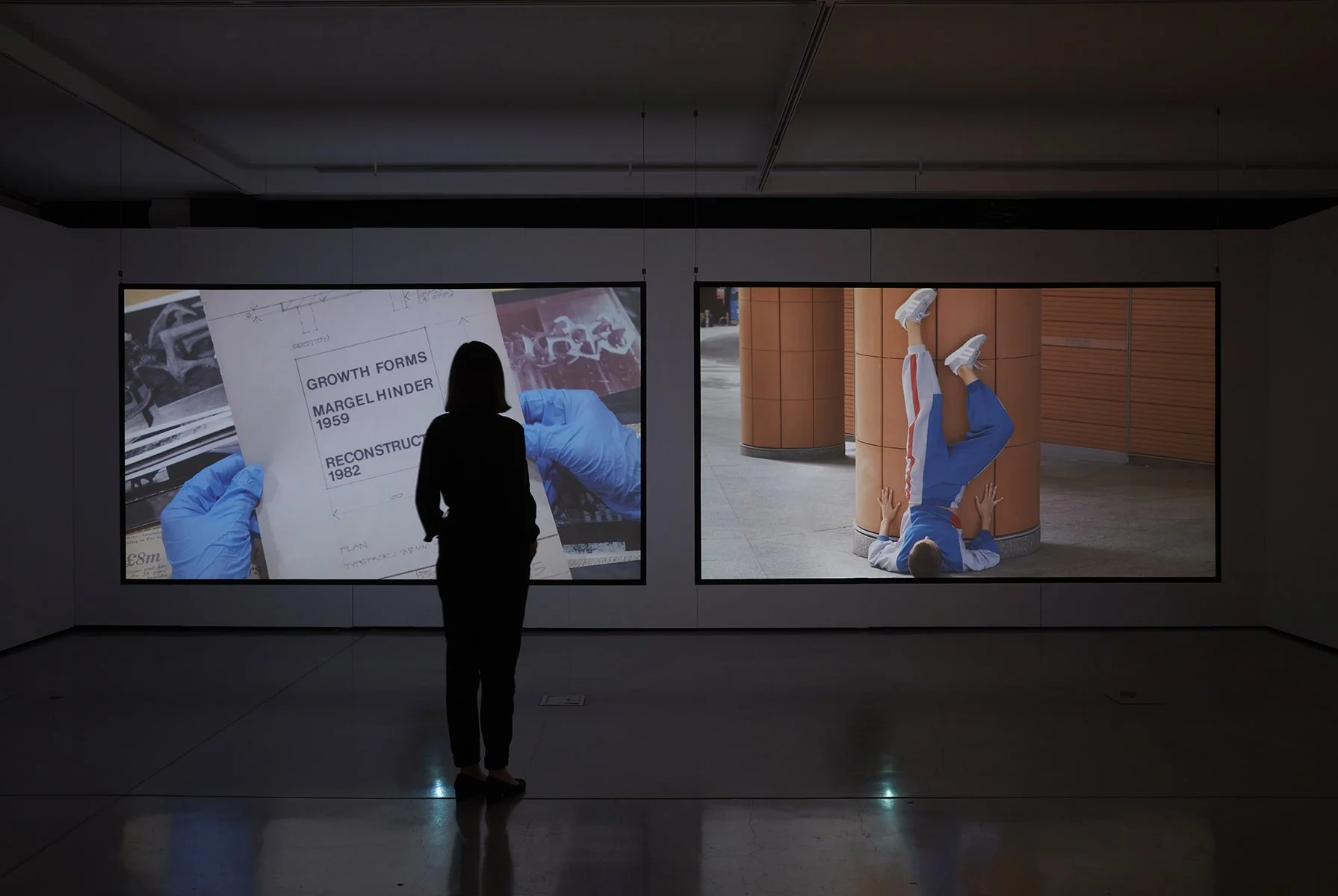
This solo exhibition by Diana Baker Smith explores the histories of Sydney’s built environment through the work of Australian-American sculptor Margel Hinder (1906-1995).
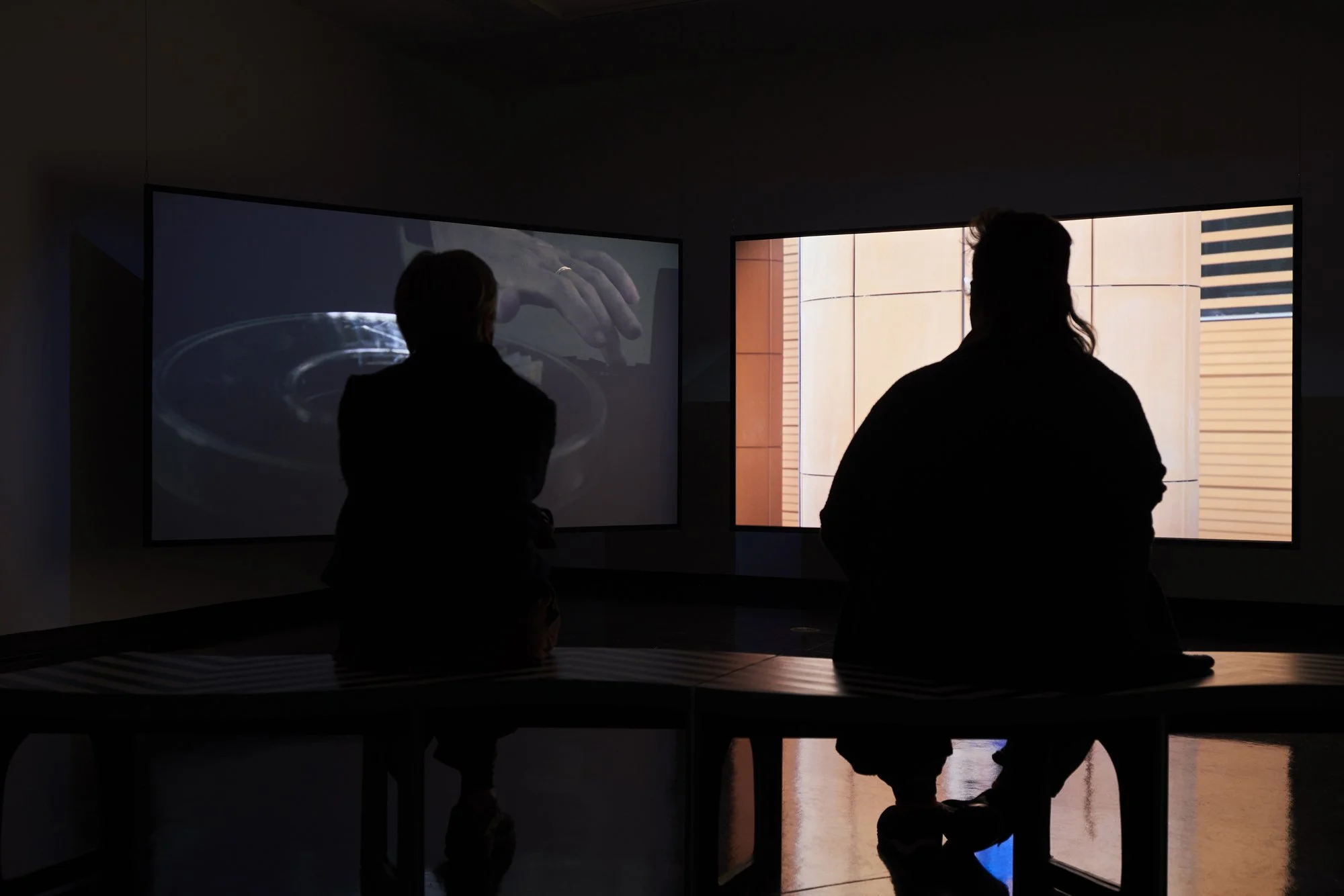
The project maps the extraordinary journey of Hinder’s sculpture Growth Forms, held in the UTS Art Collection, through a series of new works that explore the tension between public art and urban development in Sydney.
The exhibition includes a new video installation developed with cinematographer Gotaro Uematsu, choreographer Brooke Stamp, dancer Ivey Wawn, costume designer Leah Giblin, and musician Bree van Reyk, as well as a display of archival material related to Hinder’s work, supported through loans from the Art Gallery of NSW.
Diana Baker Smith with Ella Sutherland
Make a Movement
2021
Applied vinyl
Four panels (l-r: 88 x 101cm; 100 x 70.5cm; 88 x 101cm; 99 x 70.5cm)
Make a Movement is part of series of works exploring the archive of the Australian artist, choreographer and dancer, Philippa Cullen (1950-75).
This text work is a re-approximation of one of Cullen’s instructional scores Right Durations. Arranged as they are, the words – dancing across the windows outside Artspace – appear to enact this proposition while at the same time declaring it.
‘Tasks yet to be composed for the occasion,’ Diana Baker Smith, curated by Bree Richards, 2021. Installation view, Ideas Platform, Artspace, Sydney. Photo: Zan Wimberley.
Diana Baker Smith
The One Hour Concert (Hobart)
2022
Live Performance
60 minutes
Performers: Sofie Burgoyne and Wendy Morrow
Musician: Jon Smeathers
The One Hour Concert (Hobart) is part of a series of works exploring the archive of the Australian artist, choreographer and dancer, Philippa Cullen (1950-75).
While researching Cullen’s 24 Hour Concert, 1974, Baker Smith learned this participatory performance took place on the day when clocks are put forward for daylight savings—meaning it ran for only 23 hours. A second, hour-long concert was planned for the following year to make up for the lost time, but Cullen died before this could happen.
This story, and Cullen’s work, were the starting point for Baker Smith’s improvisational performance, The One Hour Concert (Hobart), made in collaboration with dancers Wendy Morrow, Sofie Burgoyne and musician Jon Smeathers. Across its sixty-minute duration, the dancers embodied and reimagined gestures drawn from 24 Hour Concert, encountered through documentation, performance instructions, and other archival traces. With The One Hour Concert (Hobart), Baker Smith grapples with Cullen’s elusiveness, while gesturing toward alternative methods: for valuing her practice and rewriting art history.
___________
Installation view, The One Hour Concert (Hobart), Diana Baker Smith with Sofie Burgoyne Wendy Morrow and Jon Smeathers, Contemporary Art Tasmania, Hobart 2022. Photo: Rèmi Chauvin.
2016 | Live Performance, Installation and 2 Channel HD Video | 5'
Barbara Cleveland (Diana Baker Smith, Frances Barrett, Kate Blackmore and Kelly Doley)
Videography: Dominick Kirkwood
Video Editing: Kate Blackmore
Signage: Kelly Doley
Set Construction: Daniel Hollier
Production: Bev Shroot
Invited participants: Amy Ireland, Anne Marsh, Sunday School, Eugene Choi, Francesca da Rimini, Mike Parr, Richard Bell, Salote Tawale with Get to Work, and Virginia Barratt.
Making History is the third in a series of works exploring the life and legacy of the mythic performance artist Barbara Cleveland. Taking Cleveland’s 1970s sketches of theatre sets as a starting point, the artist’s created an architectural framework to consider the legacy of performance and live art histories in Australia. This took the form of an installation of set pieces, theatrical structures, and video installations, which operated as both a performance space and an evolving archive of performance.
Working with a range of invited guests, the artists reactivated Cleveland’s original designs through a discursive program of performances, lectures, re-enactments and discussions in the gallery over a 3-month period. Some of the participants chose to revisit the work of Cleveland, while others used re-enactment to re-visit their own work, or the work of other artists that have been marginalised throughout art history. Through these various approaches to archival material, the artists examined how alternative historiographical approaches and embodied practices can be used to reimagine past acts and events in the here-and-now.
The program included the following presentations by the invited participants:
Eugene Choi, This Moment (2016)
Anne Marsh, Archives, Performance Art and Feminism/s in Australia (2016)
Richard Bell, Making History (2016)
Mike Parr, Barbara Cleveland Eats and Apple (2016)
Salote Tawale with Get to Work, Making History (2016)
Amy Ireland, Virginia Barratt, Francesca da Rimini, B.A.B.S, (2016)
Sunday School (Kelly Doley and Diana Smith), In Search of Pat Larter (2016)
This project was commissioned for the 20th Biennale of Sydney The future is already here – it’s just not evenly distributed and was supported by the Australia Council for the Arts.
Images by Jessica Maurer and courtesy of the artists.
Thinking Business, 2020
Barbara Cleveland
Thinking Business is a survey exhibition of the Australian art collective Barbara Cleveland. Working together for over 15 years, Barbara Cleveland’s practice draws on the historical lineages of both the visual and performing arts. Thinking Business presents a suite of videos, photographs and prints from Barbara Cleveland’s archive.
The exhibition takes its title from author Hannah Arendt’s description of her friendship with Mary McCarthy. As Arendt wrote, “it’s not that we think so much alike, but that we do this thinking-business for and with each other.” Thinking-business is the shared intellectual and creative pursuit between women. This term became a way for Barbara Cleveland to conceptualise and affirm their long term collaboration and the body of work they had amassed since 2007. In turn, Thinking Business speaks not only to the collective’s unique mode of working together but, equally, to the larger thematics of female friendship, collaboration and artistic labour.
Diana Baker Smith and Kelly Doley
2015
Performance Lecture
30 minutes
The Lucy R. Lippard Lecture engages with the histories of feminist art and activism in Australia through a series of site specific performance lectures. The project takes as its starting point a number of informal discussions and lectures held in Australia in 1975 by the American art critic and curator Lucy R. Lippard about gender and inequity in the arts. Lippard’s visit has since become legendary, contributing to the Women’s Art Movement in Australia and other important feminist activities, including the establishment of the Women’s Art Register and the feminist art journal Lip.
Baker Smith and Doley revisit Lippard’s visit as a way to open up the story and consider the relevance of feminist art histories in the contemporary context. They return to the archive and interview artists and activists involved in the Women’s Art Movement, including: Jude Adams, Bonita Ely, Anne Marsh, Anne Newmarch and Ann Stephen. Building on the hazy memories, anecdotes and rumours that circulated after the event, they reanimate this historical moment, while also reflecting on the unreliable nature of archival research.
The Lucy R. Lippard Lecture was first presented as part of the Ideas Platform at Artspace in Sydney.